Adding lesson without uploading file
THIS IS A SAMPLE TEXT FOR DEMONSTRATING YOU CAN PAST TEXT DIRECTLY HERE INSTEAD OF UPLOADING A FILE
Home Energy Efficiency
Improving Comfort, Reducing Costs, and Saving Energy
1. Introduction
Home energy efficiency refers to using less energy to provide the same level of comfort, lighting, heating, cooling, and appliance performance in a household. An energy-efficient home minimizes energy waste while maintaining or improving indoor comfort and safety. Improving energy efficiency is one of the most cost-effective ways for households to reduce monthly utility bills, enhance indoor comfort, and lower environmental impacts.
Residential buildings account for a significant share of total energy consumption, largely due to heating, cooling, lighting, and appliance use. Many homes lose energy through air leaks, poor insulation, inefficient equipment, and outdated appliances. Addressing these issues through targeted energy efficiency measures can lead to long-term savings and improved living conditions.
Energy efficiency improvements can range from simple, low-cost actions such as sealing air leaks and switching to LED lighting, to more comprehensive upgrades such as insulation improvements, high-efficiency HVAC systems, and smart energy controls. Together, these measures help households reduce energy consumption while increasing resilience to rising energy costs.
2. Key Areas of Home Energy Use
Understanding where energy is used in a home is the first step toward improving efficiency. The largest energy consumers in most households include space heating and cooling, water heating, lighting, and major appliances.
2.1 Heating and Cooling
Heating and cooling typically represent the largest portion of household energy use. Inefficient furnaces, air conditioners, or heat pumps, combined with air leakage and poor insulation, can significantly increase energy consumption.
Common efficiency strategies include:
-
Upgrading to high-efficiency HVAC systems
-
Sealing duct leaks
-
Installing programmable or smart thermostats
-
Improving insulation in walls, attics, and basements
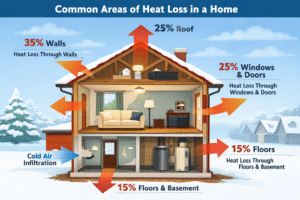
Caption: Common areas of heat loss and energy leakage in a typical home.
2.2 Water Heating
Water heating is another major energy use in homes, especially in households with multiple occupants. Energy is consumed not only in heating water but also through heat loss from pipes and storage tanks.
Efficiency improvements include:
-
Installing high-efficiency or heat pump water heaters
-
Insulating hot water pipes
-
Using low-flow showerheads and faucets
-
Reducing hot water waste through behavioral changes
2.3 Lighting and Appliances
Lighting and household appliances account for a growing share of residential electricity use. Older appliances and incandescent bulbs consume significantly more energy than modern alternatives.
Energy-saving measures include:
-
Replacing incandescent bulbs with LED lighting
-
Choosing ENERGY STAR-certified appliances
-
Using power strips to reduce standby power use
-
Running appliances during off-peak hours when possible
3. Building Envelope Improvements
The building envelope includes the walls, roof, floors, windows, and doors that separate indoor and outdoor environments. A well-sealed and insulated envelope is essential for maintaining indoor temperatures and reducing heating and cooling demand.
3.1 Insulation
Insulation slows heat transfer, keeping homes warmer in winter and cooler in summer. Insufficient insulation can lead to temperature fluctuations and higher energy bills.
Key insulation areas include:
-
Attics and roofs
-
Exterior walls
-
Floors above unconditioned spaces
-
Basements and crawl spaces
Proper insulation improves comfort and reduces the workload on heating and cooling systems.
3.2 Air Sealing
Air leaks around windows, doors, electrical outlets, and plumbing penetrations allow conditioned air to escape and outdoor air to enter. Even small gaps can lead to significant energy losses.
Common air-sealing techniques include:
-
Weatherstripping doors and windows
-
Caulking cracks and gaps
-
Sealing ductwork
-
Installing airtight covers for outlets and recessed lighting
[Picture 2: Technician sealing air leaks around a window and door frame]
Caption: Air sealing helps prevent energy loss and improves indoor comfort.
4. Benefits of Home Energy Efficiency
Improving home energy efficiency offers multiple benefits beyond energy savings.
4.1 Cost Savings
Energy-efficient homes use less electricity and fuel, leading to lower monthly utility bills. Over time, these savings can offset the upfront cost of efficiency upgrades.
4.2 Improved Comfort and Health
Efficiency improvements help maintain consistent indoor temperatures, reduce drafts, and improve indoor air quality. Proper ventilation and reduced moisture can also lower the risk of mold and indoor pollutants.
4.3 Environmental Benefits
Reducing household energy use lowers greenhouse gas emissions and decreases demand on power plants and fuel supplies. Energy efficiency plays a critical role in reducing overall environmental impact.
5. Conclusion
Home energy efficiency is a practical and effective approach to reducing energy use, lowering costs, and improving comfort. By focusing on major energy consumers such as heating, cooling, water heating, lighting, and appliances, households can achieve meaningful energy savings. Improvements to insulation, air sealing, and efficient equipment provide long-term benefits for homeowners and renters alike.
Investing in energy efficiency is not only a financial decision but also a step toward a more sustainable and comfortable living environment. With careful planning and gradual upgrades, homes of all ages and sizes can become more energy efficient and resilient.